
Organizations don’t struggle because people lack knowledge. They struggle because decisions are unclear, accountability is diffused, and well-intended effort doesn’t translate into consistent results.
Fusion’s workshops are designed to address that gap — the space between knowing what should happen and making it happen.
These strategic workshops focus on how people think, decide, and act when the work is complex and the stakes are real. Participants examine assumptions, clarify roles, and strengthen the decision and communication practices that drive performance day after day. The emphasis is not on theory or motivational messaging, but on building the capability to produce reliable outcomes in demanding environments.
Engagement and Accountability are persistent challenges in organizations where work depends on professional judgment, collaboration, and discretionary effort. In these roles, accountability cannot be achieved through incentives, monitoring, or role descriptions alone. This workshop examines what the research tells us about how engagement and accountability are shaped by clarity of expectations, priority focus, and line of sight between daily work and organizational goals. Participants explore how leadership practices and role design influence where employees invest their attention and effort, and how strengthening these conditions supports ownership, sound judgment, and sustained performance.
A workshop for leaders and teams to learn how to communicate more effectively across different behavioral styles using the DISC framework. Because behavior is what people actually see and respond to, understanding style patterns can quickly reduce misunderstanding and friction. Participants learn how styles shape expectations, decision-making, and follow-through—and how to flex communication in practical ways that strengthen alignment and execution.
Learning That Builds Leaders is an evidence-based workshop grounded in research on adult learning, motivation, and leadership development. Built on a single, rigorous body of science, the workshop is delivered through two distinct pathways to meet leaders where they are. One pathway focuses on developing leaders—helping new and emerging leaders build the learning behaviors, feedback-seeking skills, and identity foundation required to grow into leadership roles. The second pathway is designed for experienced leaders who shape others’ development, focusing on how leader behavior, expectations, and everyday decisions create—or constrain—a learning organization. Together, the two pathways address leadership development as both an individual capability and a systemic responsibility.
Situational Leadership helps leaders match their approach to what a person needs on a specific goal or task—using the right balance of direction and support to build both competence and commitment. Participants learn a practical, shared language for goal setting, diagnosing development level, and matching leadership style, so they avoid common breakdowns like undersupervising beginners or oversupervising experienced performers and can drive consistent execution across mixed-experience teams.
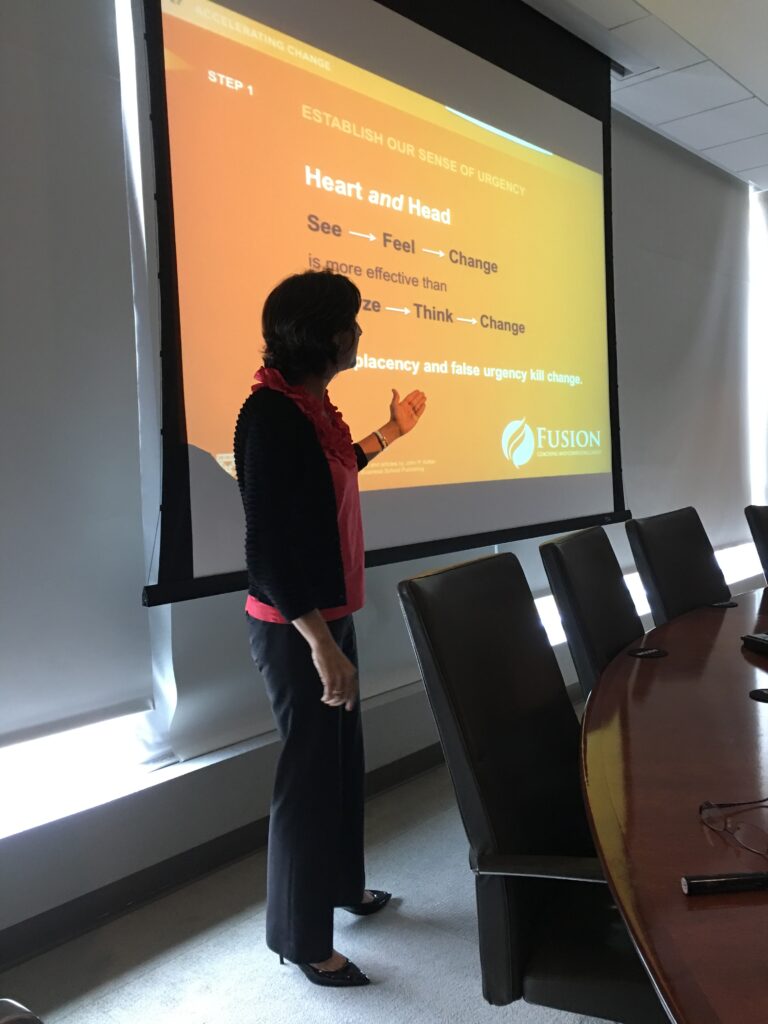
This workshop introduces Kotter’s Eight-Step framework for leading successful change and helps leaders understand why most change efforts fail. Participants learn how to create true urgency, build a guiding coalition, communicate vision for buy-in, remove barriers, and sustain momentum so change becomes part of everyday work. The focus is on translating the framework into practical leadership actions that move change forward
This workshop helps leaders and teams run meetings that actually move work forward. Participants learn how to clarify purpose and outcomes before the meeting, diagnose issues quickly during discussion, make decisions efficiently, and leave with clear actions, owners, and deadlines. The focus is on disciplined meeting practices—before, during, and after—so meetings become a tool for alignment, execution, and accountability rather than a drain on time and energy.
This workshop helps leaders build the resilience capacity and strategic agility organizations need to thrive in disruption. Participants strengthen how they notice and interpret change, broaden practical response options, and mobilize networks and resources so teams can respond decisively, recover effectively, and adapt without losing momentum.
Systems thinking is the practice of seeing how parts of a system influence one another over time, so you can anticipate the downstream impact of decisions. Because people don’t usually see the consequences of their most important decisions until much later, teams often end up solving symptoms instead of causes. Participants use practical tools such as the Systemic Iceberg, feedback loops, and causal mapping to identify root causes, recognize recurring patterns, and avoid “fixes that fail” that temporarily relieve pressure but make the system worse over time.
Engagement and Accountability are persistent challenges in organizations where work depends on professional judgment, collaboration, and discretionary effort. In these roles, accountability cannot be achieved through incentives, monitoring, or role descriptions alone. This workshop examines what the research tells us about how engagement and accountability are shaped by clarity of expectations, priority focus, and line of sight between daily work and organizational goals. Participants explore how leadership practices and role design influence where employees invest their attention and effort, and how strengthening these conditions supports ownership, sound judgment, and sustained performance.
A workshop for leaders and teams to learn how to communicate more effectively across different behavioral styles using the DISC framework. Because behavior is what people actually see and respond to, understanding style patterns can quickly reduce misunderstanding and friction. Participants learn how styles shape expectations, decision-making, and follow-through—and how to flex communication in practical ways that strengthen alignment and execution.
Learning that Builds Leaders
How Leaders Grow
and How They Create Learning for Others
Learning That Builds Leaders is an evidence-based workshop grounded in research on adult learning, motivation, and leadership development. Built on a single, rigorous body of science, the workshop is delivered through two distinct pathways to meet leaders where they are. One pathway focuses on developing leaders—helping new and emerging leaders build the learning behaviors, feedback-seeking skills, and identity foundation required to grow into leadership roles. The second pathway is designed for experienced leaders who shape others’ development, focusing on how leader behavior, expectations, and everyday decisions create—or constrain—a learning organization. Together, the two pathways address leadership development as both an individual capability and a systemic responsibility.
Situational Leadership II
Leading with Precision in Real Work
Situational Leadership helps leaders match their approach to what a person needs on a specific goal or task—using the right balance of direction and support to build both competence and commitment. Participants learn a practical, shared language for goal setting, diagnosing development level, and matching leadership style, so they avoid common breakdowns like undersupervising beginners or oversupervising experienced performers and can drive consistent execution across mixed-experience teams.
This workshop introduces Kotter’s Eight-Step framework for leading successful change and helps leaders understand why most change efforts fail. Participants learn how to create true urgency, build a guiding coalition, communicate vision for buy-in, remove barriers, and sustain momentum so change becomes part of everyday work. The focus is on translating the framework into practical leadership actions that move change forward
This workshop helps leaders and teams run meetings that actually move work forward. Participants learn how to clarify purpose and outcomes before the meeting, diagnose issues quickly during discussion, make decisions efficiently, and leave with clear actions, owners, and deadlines. The focus is on disciplined meeting practices—before, during, and after—so meetings become a tool for alignment, execution, and accountability rather than a drain on time and energy.
This workshop helps leaders build the resilience capacity and strategic agility organizations need to thrive in disruption. Participants strengthen how they notice and interpret change, broaden practical response options, and mobilize networks and resources so teams can respond decisively, recover effectively, and adapt without losing momentum.
Systems thinking is the practice of seeing how parts of a system influence one another over time, so you can anticipate the downstream impact of decisions. Because people don’t usually see the consequences of their most important decisions until much later, teams often end up solving symptoms instead of causes. Participants use practical tools such as the Systemic Iceberg, feedback loops, and causal mapping to identify root causes, recognize recurring patterns, and avoid “fixes that fail” that temporarily relieve pressure but make the system worse over time.