
Strategic planning creates clarity, alignment, and confident execution over time.

Strategic planning is most effective when it establishes the conditions that support consistent performance across the organization.
Research shows that planning contributes to performance by improving how decisions are made and how work is coordinated. When priorities and goals are clearly defined, leaders are more likely to make decisions that reinforce one another rather than compete. This reduces variation across teams and strengthens execution.
Strategic planning also improves how resources are used. It provides a basis for evaluating tradeoffs, focusing effort, and aligning initiatives with organizational priorities. Without that structure, resources are often spread across competing efforts with limited impact.
Another key benefit is coordination. Planning creates a shared understanding of direction, which allows different parts of the organization to act with greater consistency. This is particularly important in complex environments where actions in one area can affect outcomes in another.
Strategic direction defines where the organization is going and what will guide decisions along the way.
It provides clarity on purpose, priorities, and the outcomes the organization is working toward. When direction is clear, leaders make more consistent decisions, teams understand what matters most, and work begins to align across functions and levels.
Without clear direction, organizations often move forward—but not always in the same direction. Priorities compete, decisions are made based on individual interpretation, and effort becomes fragmented.
Strategic direction establishes the foundation for everything that follows. It ensures that strategy is not left open to interpretation, but is understood in a way that can be carried into planning, execution, and everyday decision-making.
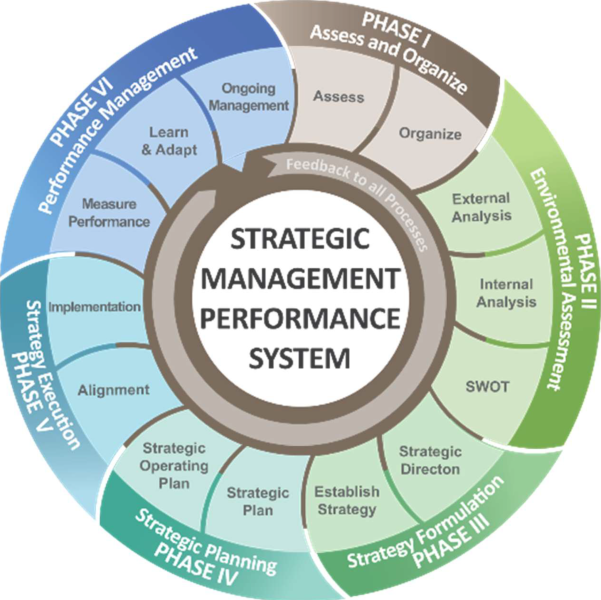
Source: LBL Strategies
Strategic planning sets direction—and brings that direction to life through change.
As a strategic plan is implemented, the organization begins to operate differently. Priorities are clarified, work is carried out in new ways, and strategic initiatives are actively advanced and tracked. These changes are intentional and are expected to take hold. The purpose of planning is not only to define direction, but to ensure that direction is reflected in how the organization functions day to day.
Because strategic plans create change, that change must be managed. Initiatives require structure, oversight, and follow-through to ensure that new ways of working are sustained and not lost over time. Managing change is not separate from strategic planning—it is part of executing it effectively.
At the same time, conditions can evolve. When meaningful shifts occur that affect assumptions or direction, leaders must be prepared to reassess and adjust the plan. This requires discipline to stay the course and judgment to recognize when change is necessary.
Strategic planning provides both: a clear path forward and the ability to adapt when it matters.
Download our free article below:
Strategic Thinking: The Key to Developing Strategic Leaders
Strategic planning does not end with a plan. It establishes an ongoing management discipline — one that helps leaders monitor progress, make adjustments, and integrate strategic direction into how decisions are made over time.
Fusion’s strategic planning work is informed by recognized professional standards and long-standing practice in public, private, and technical environments, including certification as a Strategic Planning Professional and membership in the Association for Strategic Planning.
Use the form below to tell us more about where your organization needs improvement and your timeline. We'll respond within two business days to schedule a conversation.